
Fruits of Réunion: as soon as you step off the plane, you’ll see them everywhere — on market stalls, along roadsides, in Creole gardens, at accommodations’ breakfasts, and even in certain dishes. The real pleasure is knowing which ones to taste first, at what time of year, how to choose them, and above all how to enjoy them like a local. Here’s a delicious, practical guide to making the most of tropical flavors during your stay.
Taste in the right places: markets, roadsides, and gardens
In Réunion, the fruit experience isn’t just about buying: it’s a ritual. The market (Saint-Paul, Saint-Pierre, Saint-Denis…), is ideal for comparing, asking questions, smelling, touching (gently) and spotting what’s ripe. Sellers will often tell you how to eat a given fruit, with or without salt, with a squeeze of lemon, or with a spoon.
Roadside stands, for their part, hold some very good surprises: fruit picked in the morning, low prices, local varieties sometimes found nowhere else. Finally, if you’re staying in a house with a garden, keep your eyes open: many owners gladly share a ripe mango, guava trees weighed down with fruit, or a bunch of bananas. The key is to buy in small quantities, but often, to taste at peak ripeness.

Must-try essentials (and how to enjoy them)
Mango: fleshy, fragrant, sun-kissed
Mango is one of the most obvious pleasures: intense fragrance, juicy flesh, fibers that vary by variety. In Réunion, it’s eaten plain, very ripe, sometimes in thick slices. Some like to enjoy it still a little firm, with a pinch of salt or chili, tropical snack-style.
Selection tip: a good mango gives off a sweet smell near the stem and yields slightly under finger pressure (without being soft). If it’s very green and hard, it will often lack fragrance. If it’s too wrinkled, it may already be overripe.
Victoria pineapple: the little tangy king
If you had to taste only one, many would tell you: the Victoria pineapple. Smaller than other varieties, it’s incredibly aromatic, with a sugar/acid balance that makes you want to come back for more. It’s eaten in wedges, well chilled, or in fruit salad. It also pairs very well with savory dishes (pork, poultry, lightly spicy sauces).
Tasting tip: let it finish ripening at room temperature if needed, then place it in the fridge an hour before cutting. A ripe Victoria is fragrant, and its eyes detach more easily.
Banana (and cooking banana): from snack to Creole dish
Bananas in Réunion aren’t limited to the standard yellow fruit. You’ll find small very sweet bananas, more fragrant bananas, and cooking bananas (plantain, green bananas) used as accompaniments: fried, baked, in a carry, or simply boiled.
Tip: if you see bananas sold still very green, ask if they’re meant to be cooked. For dessert, choose very ripe, speckled bananas for a more intense flavor.
Our Vacation Rentals in Réunion
Passion fruit: a spoon and you’re off
Passion fruit (maracuja) is perfect for breakfast or a refreshing break. Cut it in half and eat the pulp with a spoon. Its aroma is powerful, and its acidity instantly awakens the taste buds. Mixed into plain yogurt, a fruit salad, or a juice, it’s a must.
How to choose it: slightly wrinkled skin often indicates a well-sweetened, concentrated pulp. Too smooth and very firm, it may still be a bit young.
Papaya: sweetness and freshness (adjust to your taste)
Papaya sometimes divides: some love its subtle sweetness, others find it too mild. On the island, it’s often served very chilled, sometimes with a squeeze of lime to lift its flavor. It’s also nice in cubes in a fruit salad, or blended into a smoothie.
Tip: choose a papaya with skin that’s yellowing/orange and flesh that yields slightly. A papaya that’s too green lacks sugar and aromas.
Lychee: the seasonal star, delicate and festive
When it’s in season, lychee becomes almost an event. Its floral scent, translucent and juicy flesh, its sweetness… it’s the fruit you snack on by the handful. It’s enjoyed plain, but can also enhance a fruit salad or a frozen dessert.
Good to know: lychee is best very fresh. Choose one with a well-colored shell (red/pink depending on the variety), without suspicious spots, and eat it quickly after purchase.
Guava: intense fragrance, enjoyed plain or as punch
Guava can be white or pink. Its aroma is bold, tropical, with a slight acidity. You bite into it, cut it into quarters, or make very aromatic juices. Some guavas have lots of small seeds: that’s part of the charm, but if you don’t like it, prefer preparations (juice, purée, jam).
Star fruit: crunchy, tangy, decorative
Star fruit, recognizable by its star shape once sliced, adds a tangy and very refreshing touch. It’s eaten plain (well ripe), or in a salad. It’s also used to decorate desserts and plates, but it would be a shame to consider it only as an ornament: when it’s just right, it’s really pleasing.

Coconut: coconut water and fresh flesh
Drinking a fresh coconut, especially after a hike or a hot morning, is one of life’s simple pleasures. Coconut water is sweet, hydrating, and the flesh (depending on maturity) can be tender and delicate. You can sometimes find it ready to drink, already opened, at markets or certain stands.
The more curious fruits: to try if you like discovering
Once the big classics are checked off, the island also offers less known or more seasonal fruits, sometimes sold in small quantities: soursop (sweet-tangy flavor), jamalac (crunchy and light), sugar apple (creamy flesh), or various varieties of citrus and guava trees depending on the areas. If you like to explore, dare to ask what is this one, and how do you eat it ?. The answers are often as tasty as the fruit.
To round out your scouting with lists and local examples, you can consult resources like Tropical fruits | Ile de la réunion – WordPress.com, which gives an overview of many fruits encountered on the island.
Calendar and seasonality: eat at the best time
In La Réunion, seasonality is very marked, and that’s excellent news: when a fruit is in season, it’s more fragrant, more affordable, and often more abundant. Exact periods vary depending on altitude, microclimates and years, but one logic remains true: don’t look at all costs for an out-of-season fruit, you’ll often be disappointed (less intense flavor, higher prices).
If you want to plan your tastings according to production periods, rely on seasonal guides like Seasonal fruits and vegetables in Réunion Island. You’ll see more clearly when to aim for lychees, when mangoes burst onto the stalls, or when certain fruits become rarer.
Choosing a ripe fruit: tips to avoid disappointment
A tropical fruit, especially one picked locally, isn’t chosen exactly like in a supermarket. In Réunion markets, smell is often your best indicator: a fragrant fruit signals good ripeness. Texture matters too: you want a slight give, not total softness. And color, finally, must be interpreted by fruit: some ripen while staying partially green, others change dramatically.
A few simple cues: the pineapple should smell good and look full, passion fruit can be wrinkled, mango should be fragrant, papaya should turn yellow. And if you hesitate, ask the vendor to choose one for today and another for tomorrow.
Our Vacation Rentals in Réunion
How Réunionnais eat them: salt, chili, lime… and common sense
You’ll often see combinations that surprise: salt on slightly firm mango, chili and lime on certain fruits, or fruits served with a sweet-and-tart sauce. The idea isn’t to mask the taste, but to create contrast. If you’re sensitive, start by tasting it plain, then try a tiny pinch of salt or a few drops of lime.
Another local habit: fruit is shared. At a table, in the car after an outing, on a beach, you cut a pineapple, peel lychees, bring out spoons for passion fruit. It’s convivial, simple, and part of the trip.
Where to do a fruit tour during your stay
Your itinerary influences what you’ll find. Coastal areas often have more accessible stands and large markets, while the Highlands sometimes offer different production (climate, altitude) and smaller, more discreet sales. Ideally, plan tasty stops: a morning market, a roadside stand during the day, and a fruit dessert in the evening.
If you like traveling with a clear plan (and easy tasting breaks to fit in), these articles can help you organize your days without missing anything: 3-day itinerary to discover the island, One-week itinerary on the island: suggested stops and Two-week itinerary on the island: in-depth discovery
Breakfast, hikes, picnics: when fruits become your best allies
Tropical fruits are perfect to pace your days: at breakfast (papaya, banana, passion fruit), as a snack before a hike (bananas, starfruit, mango), for recovery after exertion (coconut water, pineapple), or as a light dessert in the evening (lychees, guava). On a hike, favor fruits that are easy to carry and eat: bananas, passion fruit (more delicate but possible), or pieces of pineapple in an airtight container.
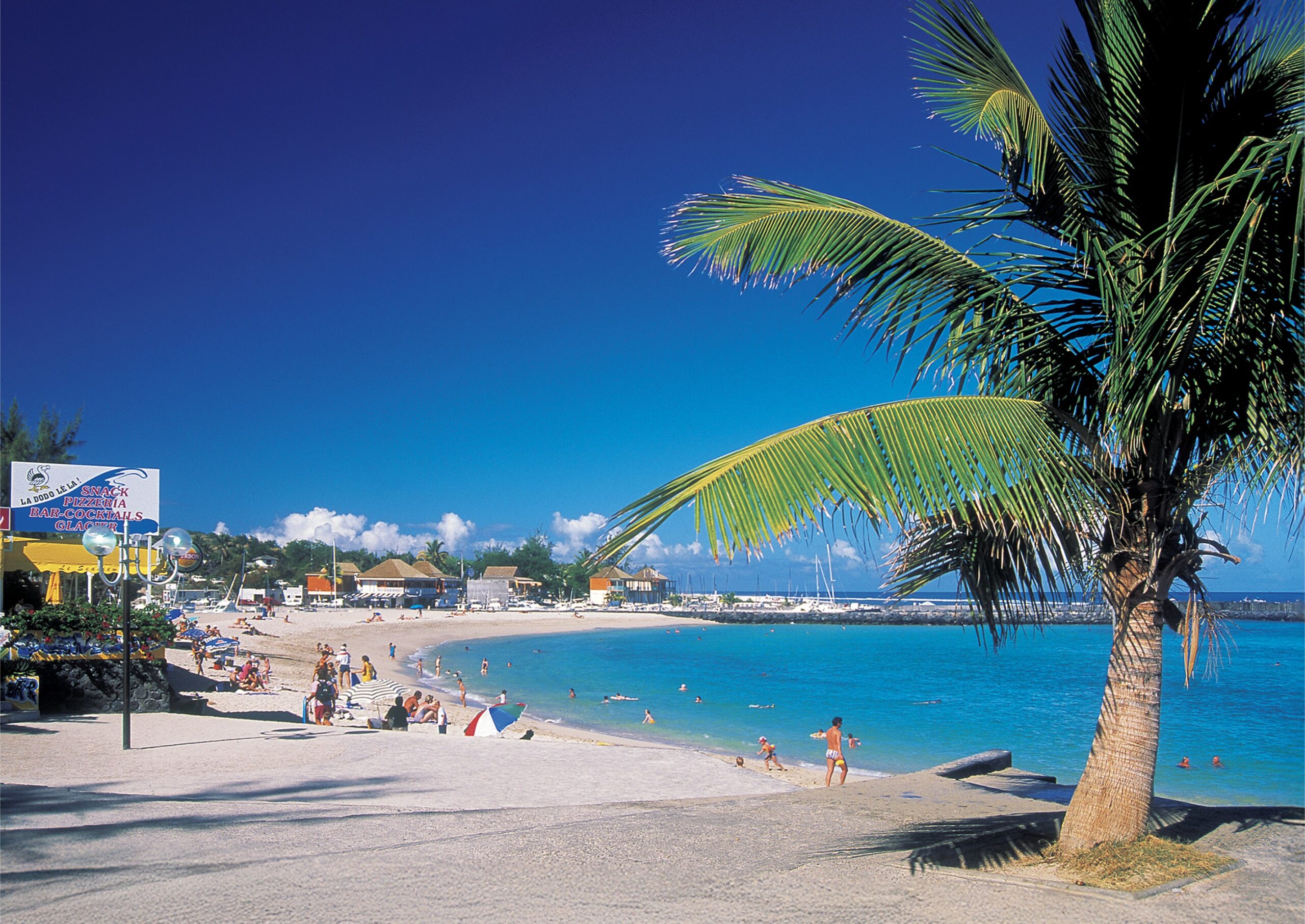
If you like early starts, combine sunrise and a fruity break: a thermos, a few pineapple wedges, and a passion fruit with a spoon changes everything. To choose great viewpoints where you can enjoy this atmosphere, you can draw inspiration from The most beautiful sunrises on the island: suggested viewpoints.
Traveling with children: which fruits to prioritize (and how to avoid mishaps)
With the family, certain fruits go over particularly well: banana (easy), Victoria pineapple (if the acidity isn’t too strong), very ripe mango (in pieces), lychee (watch the pit), papaya (very mild). For the little ones, favor fruit that is already cut and check ripeness: a fruit that’s too acidic or not ripe enough can discourage them.
A good strategy is to buy several different fruits in small quantities and do a tasting: everyone notes what they prefer. It’s fun and it turns the market into an activity in its own right. To round out your ideas for outings and suitable activities, here are activity ideas for young and old.
Some useful pointers to go further (without getting lost)
If you like to plan your discoveries, you’ll find lists of fruits and culinary guides on dedicated pages, for example The fruits and vegetables of La Réunion or The Fruits of La Réunion. And if you’re looking for a selection focused on must-tries, the exotic fruits of La Réunion to absolutely taste offers other leads to add to your list.
Common mistakes to avoid
First mistake: buying too much. Some fruits ripen quickly, and abundance makes you want to fill a bag… then you can’t keep up. Second mistake: judging a fruit only by its color (notably mango, starfruit, some citrus). Third mistake: not asking. Vendors know exactly which fruit is ready, which needs to wait, and how to eat it.
Finally, avoid systematically comparing with what you know in mainland France: here, fruits are often more fragrant, sometimes smaller, sometimes more rustic, but that’s precisely what makes their charm.
Our Vacation Rentals in Réunion
Where to set down your bags to enjoy fruits daily
The best scenario is to be able to integrate markets and stands into your routine: stop by for fruit in the morning, let them ripen, improvise a salad in the evening, and leave with a pineapple for the road. The more practical your accommodation is (kitchen, terrace, access to markets), the more you’ll enjoy this simple treat.
To organize a comfortable and independent stay, you can take a look at Our Seasonal Rentals in.
Remember: your fruity check-list according to your desires
If you want to stick to the essentials: Victoria pineapple, mango, passion fruit, lychee (in season), bananas (several types), guava, starfruit, and a fresh coconut whenever the opportunity arises. Then, leave room for the unexpected: an unknown fruit bought at a small stand, a different variety, a tasting recommended by a vendor. In La Réunion, the best way to taste is to stay curious… and to return to the market often.
 Français
 Español
 Deutsch
 English