
Two-week trip to Réunion Island to explore the cirques, lounge by the lagoon, climb an active volcano and wind along the roads of the wild South: here is an itinerary designed for those who want to see everything without rushing, alternating hikes, beaches and encounters.
Two weeks to embrace all the faces of the island
This fourteen-day route is structured around four major highlights. First the West coast to land softly, discover the lagoon and settle into the rhythm of the trade winds. Then the cirques—first Mafate on foot, then Cilaos for viewpoints and trails, and Salazie for waterfalls and Creole houses. Next, head to the South and the lunar landscapes of the Fournaise, before a finale by the water to catch your breath between diving, sunset and spiced rum. The guiding thread is variety, with stages long enough to feel the atmosphere of each valley and each village.
Days 1 to 3 — Lagoon, warm-up and first viewpoints
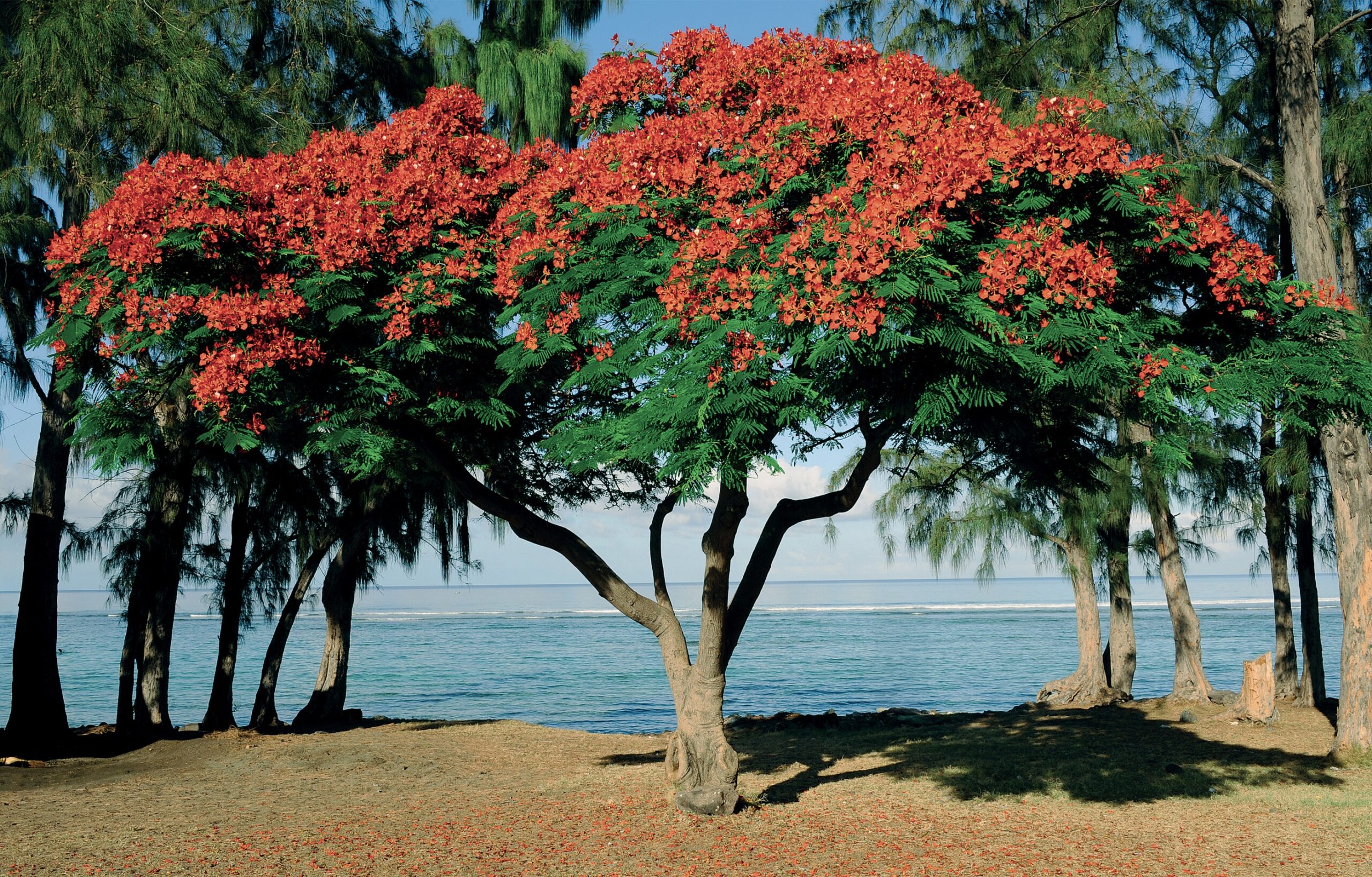
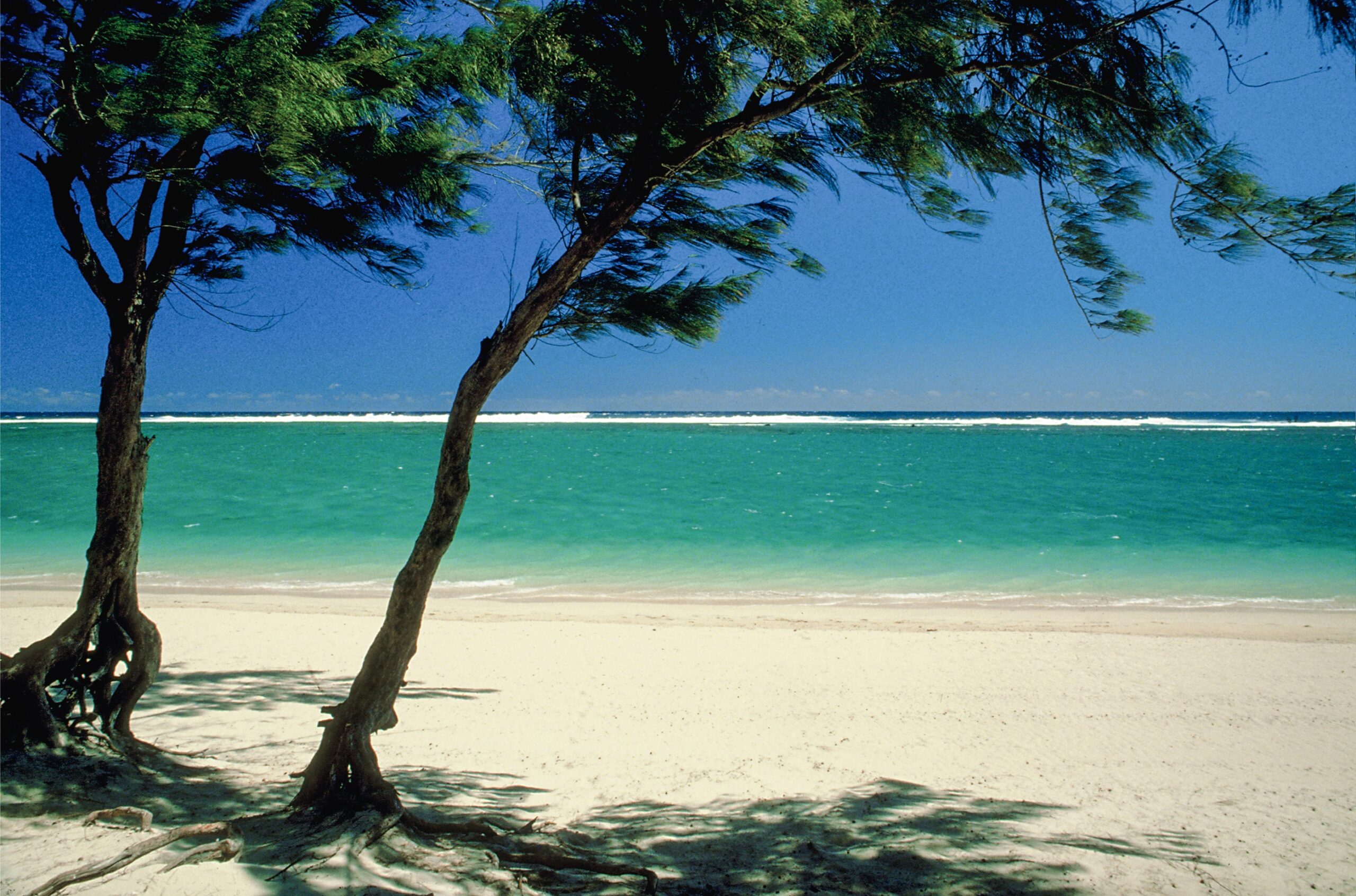
Upon arrival, head for the West coast, between Saint-Gilles and La Saline. The Hermitage lagoon, protected by the coral reef, is ideal for a first swim, snorkel gear and a picnic under the filaos. The Saint-Paul market (Friday/Saturday) offers a glimpse of seasonal fruits, from chili to samoussas, and colorful fabrics. At the end of the day, drive to Cap La Houssaye for a golden twilight on the cliffs, or to Pointe au Sel near Saint-Leu to listen to the swell striking the basalts.
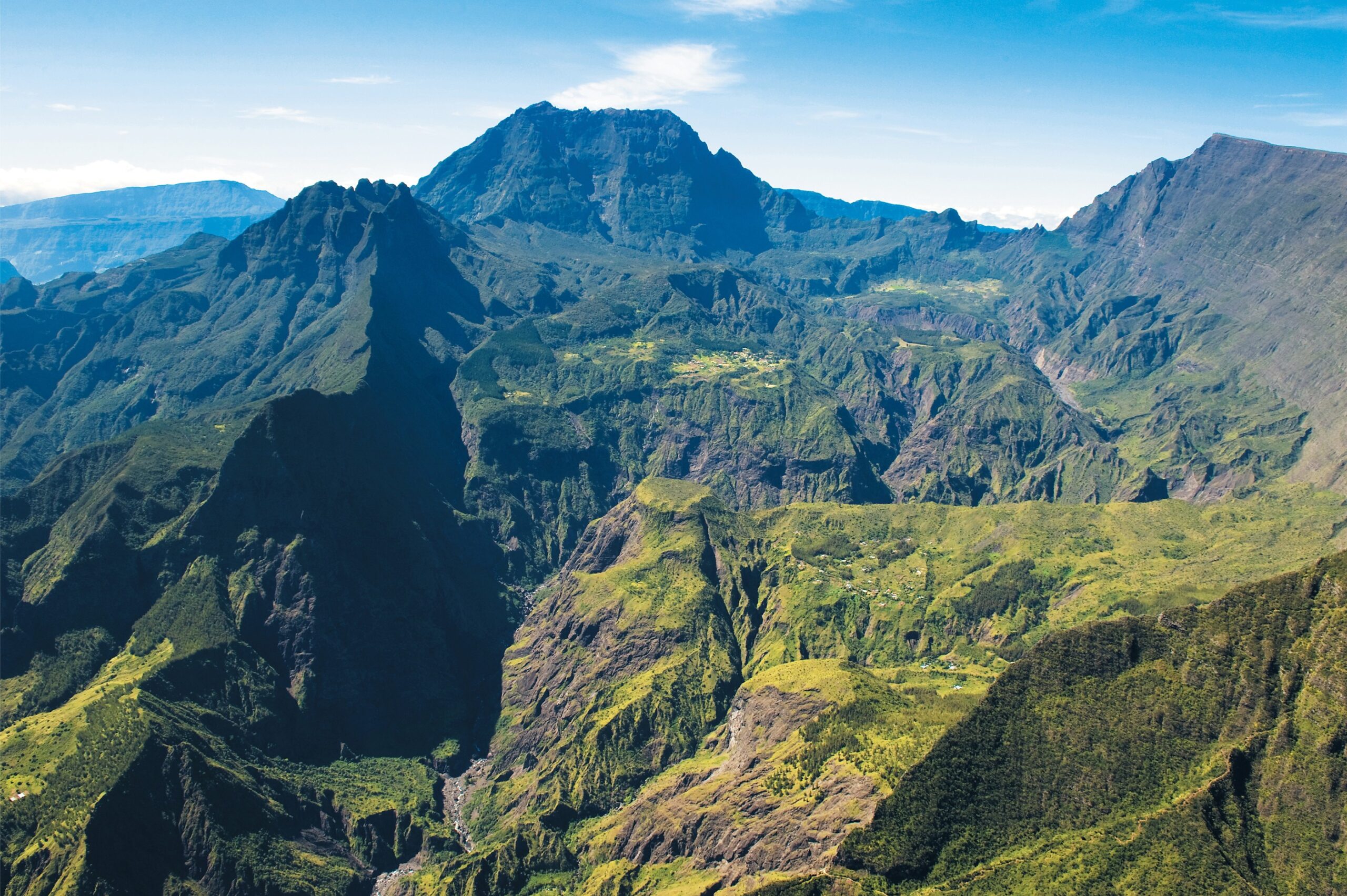
Sunrise at Maïdo remains one of the most beautiful scenic shocks of the stay. Leave at dawn, take warm clothes (it’s cool above 2,000 m), wait for the mists to open and discover Mafate below. Stay on the ridge for an easy hike to the Glacière, or head toward the Brèche if you’re in shape. To choose a morning spot suited to your desire to walk and the weather, consult this selection of viewpoints at dawn.
If you come with the idea of touring the island by car, the panoramic roads lend themselves to great daily loops. To plan your days in roaming mode and note realistic distances, a complete guide for a road trip will help you calibrate the duration of stops and spot the highlights not to miss.
Where to sleep on this section
Base yourself for two or three nights near the lagoon to limit driving and multiply swims between two hikes. Depending on the season, choose a ventilated place close to access to the RN1. For a friendly and practical address to explore from, check out our accommodations and choose the location best suited to the stages described.
Days 4 and 5 — Mafate, the walking escape
Two days in Mafate are the soul of the trip. Enter via Maïdo toward Roche Plate and Trois Roches, or via the Rivière des Galets (4×4 shuttle from the track) toward Grand-Place and Ilet à Bourse. Spend a night in a gîte to enjoy homemade carry, stars without light pollution, and the silence disturbed only by a few early roosters. The trails are clear, often rocky, with elevation gains that must be earned. Leave early, manage your water, a light windbreaker and a cap; sidehill sections can be exposed to the sun.
Our Vacation Rentals in Réunion
Depending on the weather and your fitness, adapt the loop: exit via the Orangers canal if you’re staying near Saint-Paul, or via the Col des Bœufs if you plan Salazie next. For hikers on a tight schedule, here is a 3-day express plan which will give you ideas to condense the highlights without sacrificing the essentials.
Days 6 and 7 — Cilaos, hairpins, viewpoints and small villages
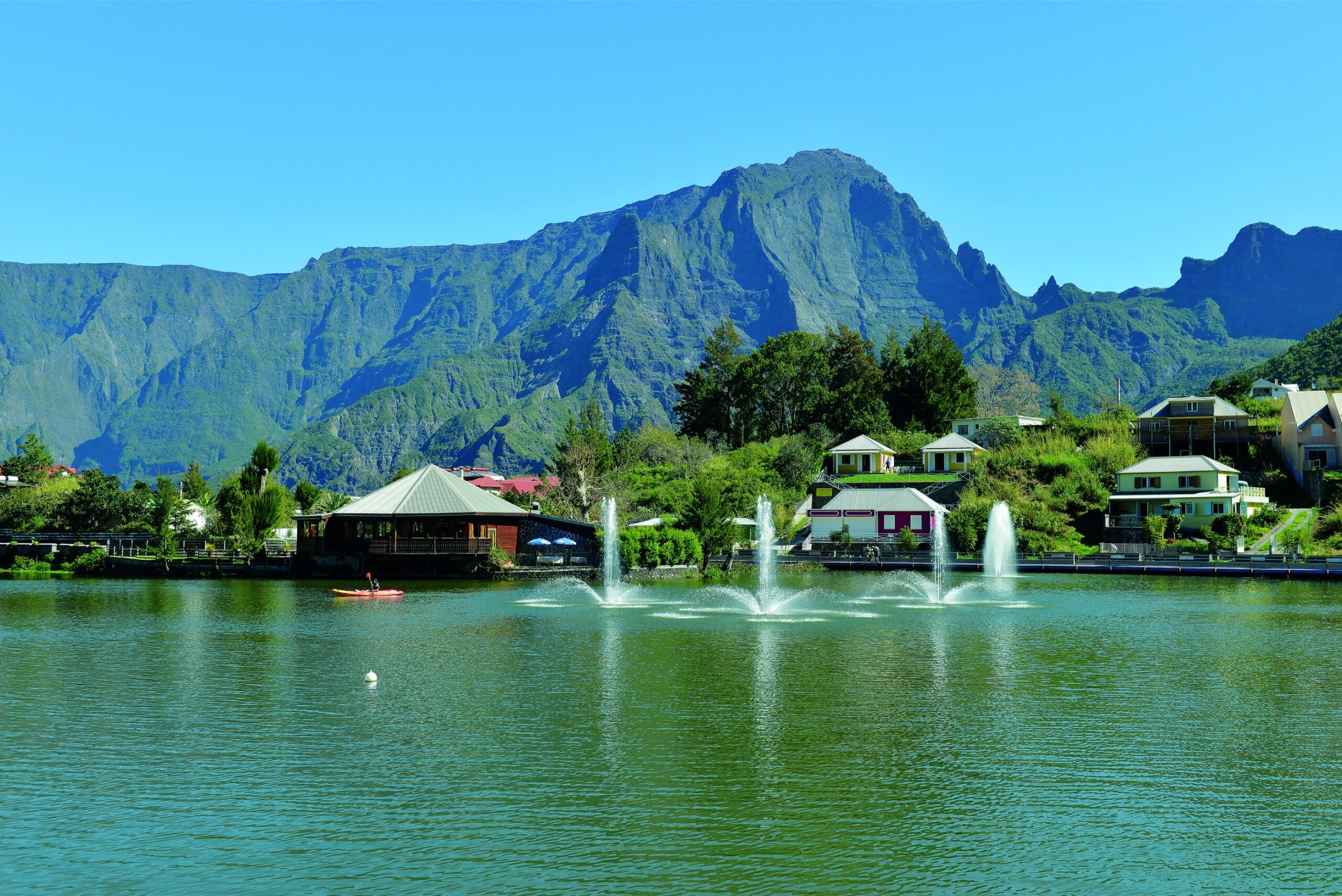
The road to Cilaos, with its 400 bends and its tunnels, is already an adventure. Take the time to drive it: stop at Ilet à Cordes to overlook the valley, detour to the Roche Merveilleuse viewpoint for a gentle perspective on the cirque. The village of Cilaos reveals an elegant Creole architecture and a soothing pace. For hiking, La Chapelle is a classic: mineral canyon, swims, playful crossings — to be avoided after heavy rains. Bras Rouge offers translucent pools and a superb photo setting. Trail lovers can climb up to the Taïbit pass toward Mafate for a sporty day.
In the evening, comfort yourself with local lentils, a local wine (in moderation), and why not a thermal bath if you like hot water. In case of fickle weather, replace a hike with discovering artisans' workshops or a visit to the Chai de Cilaos.
Day 8 — Salazie and Hell-Bourg, waterfalls and plant mist
Head back down to the coast and immediately climb along the Rivière du Mât to Salazie. Everything is green here: banana trees, chayotes, bamboo and tree ferns. Hell-Bourg, ranked among the most beautiful villages, charms with its colorful houses, its gardens and its wooden lace friezes. Maison Folio recalls the art of living of yesteryear. Along the way, the falls (Voile de la Mariée, Trou de Fer waterfall seen from Bélouve in good weather) offer a condensed taste of the exuberance of the East.
If you like walking on soft paths under the cryptomerias, explore the Bélouve forest. In dry weather, the lookout over Trou de Fer is striking; if it rains, photos will be less sharp, but the scents of moss and undergrowth are worth the detour.
Day 9 — The East, vanilla and rivers
Take advantage of the morning to visit a vanilla farm, understand the gestures of manual pollination and curing. Continue to Sainte-Suzanne (Niagara waterfall) for a swim if the flow is reasonable, or head to the Takamaka viewpoints to feel the power of the ravines. Grab a quick lunch in Saint-Benoît, then drive to Sainte-Rose. The small church of Notre-Dame des Laves, spared by the 1977 flows, is moving — keep it in mind, the volcano is approaching.
Days 10 and 11 — Piton de la Fournaise and the Wild South
Climb via the Plaine des Cafres to the Pas de Bellecombe-Jacob. The craters unfold, ocher and anthracite, almost unreal. The great classic leads to Formica Léo and then to the foot of the Dolomieu. Depending on your experience, set off very early, check the weather and trail opening advisories, and bring a windbreaker, water, sun protection. Before lacing up, consult info for the volcano to adjust equipment and timing.
After the ascent, head toward the South: the Route des Laves, the sea breaking against vitrified flows, the sculpted cliffs of Cap Méchant, the vacoa palms battered by the trade winds. In Saint-Philippe, taste a wood-fired chicken cari, a local palmiste, a candied vacoa. At Anse des Cascades, picnic under the coconut trees, swim cautiously depending on the swell. If you like thermal baths, Bassin des Hirondelles or baths in Saint-Philippe offer a relaxing break.
Day 12 — Highlands viewpoints, Grand Bassin and Plains
Head back up to Bourg-Murat for the Cité du Volcan, a perfect educational stop after the day at the crater. Then set course for Bois Court for the viewpoint over Grand Bassin, a vertiginous balcony over a suspended valley. Walkers can descend to the village, others will settle for the view and a Creole lunch in a small highlands snack bar. The Plaine des Palmistes, often wrapped in mist, reveals its longose and tamarind trees, a botanical garden atmosphere under open sky.
Days 13 and 14 — Return to the West, ocean, paragliding and sweetness
To finish beautifully, base yourself again on the West coast. Scuba diving or a snorkeling outing on the Hermitage pass, observing turtles at Kélonia, paragliding above Saint-Leu if the wind is favorable. For a zero-car day, set up your beach camp at Trou d’Eau: fins, nap, rocks with multicolored fish, chiringuito for a fresh juice. In the evening, head to Boucan Canot or l’Hermitage for a grand-format sunset.
Our Vacation Rentals in Réunion
If you travel with young children or teens, weave into your schedule suitable activities: aquarium, easy walks, safe pools and gourmet workshops. To pick ideas and put together a balanced program, see these family ideas proven.
Variations according to your desires, your shape and the season
Two weeks allow you to be generous, but not everyone has the same pace. Seasoned hikers can add the ascent of Piton des Neiges with a refuge stay (Caverne Dufour) and sunrise, or a canyoning trip at Langevin. Epicureans will stretch out the days at the lagoon and trade a cirque for more markets and mixed-heritage tables. If you come in the wetter period (January–March), cut back on long hikes on slippery terrain, favor valleys with dense vegetation and museums, and multiply early-morning starts to get ahead of the mists.
Do you only have a week? Take inspiration from this 7-day version that condenses the essentials. And to fuel your inspiration, compare this itinerary with another two-week account that strings together similar atmospheres with a more road-trip approach.
Budget, distances and stress-free logistics
Over two weeks, a rental vehicle is almost essential. The roads are excellent, but average speeds remain modest: count 35 to 45 km/h as soon as it climbs or traffic thickens. Fuel is slightly more expensive than in mainland France, parking generally easy outside city centers at rush hour. To frame your budget, plan for: car rental, accommodations (gîtes, B&Bs, rentals), meals (many Creole snacks at gentle prices), paid activities (diving, paragliding, museums), and a margin for weather surprises (changing a night's accommodation, for example).
If you want precise figures and a split down to the inch, rely on a detailed itinerary with a sample budget to validate your assumptions. To round it out with concrete tips on where to drop your bags, maps and hotel ideas, also check out these other tips and addresses for sleeping.
On the equipment side, the rule is simple: layering. Swimsuit, lycra and flip-flops for the lagoon; windbreaker, light fleece and lugged shoes for the Highlands; hat, sunscreen, filtered water bottles and mosquito repellent depending on the season. A car kit (triangle, vest) and a headlamp for night departures complete the kit. Remember to book the cirque gîtes and the night near the volcano as early as possible, especially during school holidays.
Safety, weather and microclimates
The island is a jewel of microclimates. At 2,000 m, drizzle can cool you when the lagoon is baking in the sun. The wind can pick up on the ridges while the forest shelters the walk. On the coast, rip currents and swell call for caution: favor supervised areas and the lagoon for swimming. In the mountains, heed Météo-France alerts, do not set out if there's a rain/storm warning, and postpone a hike if clouds completely block the view — you'll benefit the next day.
For the peaks and ridges, the golden rule is to start early. Besides the pleasure of sunrise, clouds often settle in late morning, especially on the East side. Hydrate, pace your efforts, and don't hesitate to shorten a loop if fatigue sets in: cirque trails are demanding by nature. In case of an eruption of La Fournaise, follow the authorities' instructions: some areas close, others open sporadically to the curious — an unforgettable spectacle, but supervised.
Where to base yourself: 3 to 4 camps to fan out
To avoid the pack-up/redo-everything each night, split your nights into four bases: West (3-4 nights) for the lagoon and Maïdo; Cilaos or Salazie (3-4 nights) for the cirques; South (2-3 nights) for the Fournaise and the lava flows; West again (3-4 nights) for final relaxation. It’s both energy-efficient and comfortable. When you book, check travel times to your must-do outings and the presence of nearby restaurants/snacks for quiet evenings. To save time, you can book your rental in one or two strategic areas and radiate out like a star.
Our Vacation Rentals in Réunion
Smart tips to get the most out of the itinerary
– Alternate strenuous days and light days to stay in shape: a big elevation gain at Mafate followed by a beach day, for example.
– Stay flexible: a magnificent sunrise can be worth sacrificing a sleep-in; conversely, persistent rain is an opportunity to explore museums, distilleries, and covered markets.
– Taste the local cuisine at every stop: spicy bouchons as snacks, rougail sausage, fish curry, bonbons piments, heaps of coconut sorbets. Sunday picnic is an art: follow the families to the shaded areas and share the smile.
– Respect nature: stay on the trails, take your trash with you, and avoid reckless swims. The plains are fragile, the ravines can rise quickly. The beauty of the island is earned, it is protected too.
Example of a day-by-day breakdown
Day 1: Arrival, West check-in, lagoon swim, sunset.
Day 2: Maïdo at dawn, ridge walk, Saint-Paul market.
Day 3: Snorkeling/diving, Saint-Leu/Kélonia, relaxing.
Day 4: Enter Mafate, guesthouse in the evening.
Day 5: Exit Mafate, road to Cilaos.
Day 6: Cilaos — La Chapelle or Bras Rouge.
Day 7: Col du Taïbit or an easy day, road to Salazie.
Day 8: Hell-Bourg, Bélouve forest, waterfalls.
Day 9: Lush east, vanilla, Takamaka, road to the South.
Day 10: Fournaise (hike), Route des Laves.
Day 11: Wild South (Cap Méchant, Anse des Cascades, Saint-Philippe).
Day 12: Volcano City, viewpoints (Bois Court), Grand Bassin.
Day 13: West — paragliding/diving, beach.
Day 14: West — free morning, shopping, departure.
To go further or adapt
Travelers who like to cross-check sources will appreciate this detailed itinerary and budget, and these practical tips with stage ideas complementary to ours. If your guiding thread is the road more than hiking, pick up tips in this complete guide for a road trip, and compare with a two-week account to adjust your priorities according to the season.
Conclusion: a mineral, vegetal and oceanic roller coaster
In fourteen days, you have time to let the island tame you: the hairpin bends no longer impress, the summits can be guessed behind the clouds, the lagoon becomes an open-air living room and Creole cuisine a second home. The secret of a successful itinerary is not to tick boxes, but to balance: an intensive cirque compensated by slow hours in the shade of the filaos; a freezing sunrise followed by a ti’jacques with bird pepper; a silent hike against a séga or a maloya when evening comes. Come back with memories of smells (guava wood, vanilla, warm rain), sounds (roosters at dawn, swell, kabosy) and images (black lava at the foot of a latanier, Bélouve mist, the taut lines of the Maïdo). Then, these two weeks will not just be a circuit: they will become a story that inevitably makes you want to return.
 Français
 Español
 Deutsch
 English