
Organizing a trip with friends to Réunion is primarily about finding the right balance between accommodation suited to the group, well-planned travel, and a flexible enough itinerary to satisfy different interests. On an island with such contrasting landscapes—coastline, mountains, villages, and volcanic scenery—the success of the trip depends less on a list of activities than on a simple, friendly, and realistic approach.
To plan a stress-free trip, it is therefore best to proceed step by step: define the group’s pace, choose a convenient base, anticipate travel times, and leave room for the unexpected. Whether you are coming to relax, hike, enjoy the beaches, or discover the Creole atmosphere, a few good habits are enough to create a smooth and memorable vacation.
Start by clarifying the group’s expectations
Before comparing accommodations or filling your itinerary, ask all participants a simple question: what does everyone really expect from the trip? In Réunion, the possibilities are varied, and this is often where misunderstandings arise. Some picture mostly beach days, while others dream of hikes, viewpoints, markets, or long dinners around the table in the evening.
The most effective approach is to identify shared priorities, then determine what can remain optional. There is no need to try to do everything together from morning to night. A trip with friends often works better when it leaves room for different paces.
Points to clarify before booking
- The overall budget each person is prepared to spend on the trip.
- The level of comfort expected for the accommodation.
- The type of vacation you’re looking for: relaxation, discovery, nature, outings, or a mix of all four.
- The role of sports activities or quieter days.
- Whether you want to share all meals or retain a certain degree of freedom.
Clarifying this avoids many tensions later on. It also makes it possible to build a logical itinerary instead of piling up appealing but incompatible ideas.
If the subject of the budget deserves a more detailed look, you can consult this guide on the budget for a one-week stay on Réunion Island, useful for allocating expenses without improvising at the last minute.
Choosing accommodation designed for group living
Accommodation plays a central role in the atmosphere of the trip. For a stay with friends, you’re not just looking for somewhere to sleep, but a pleasant base where you can get together, organize your days, share breakfast, or unwind after an excursion.
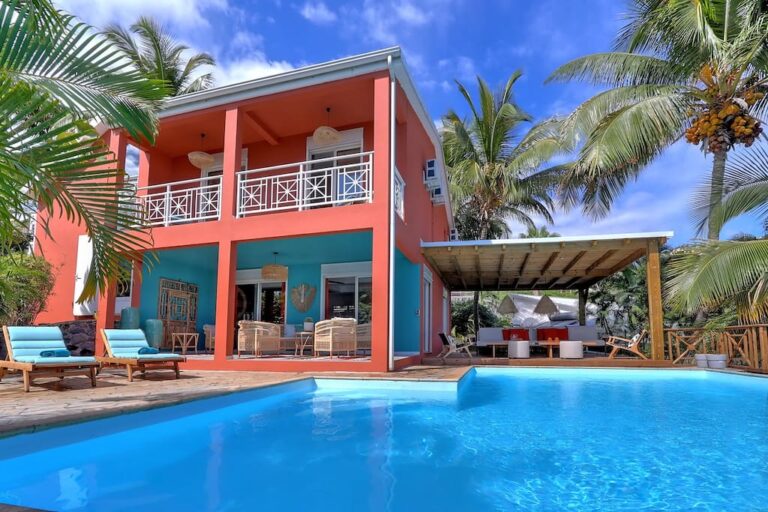
The right choice depends on the number of travelers, but also on how you live together. A group that is constantly on the move won’t have the same needs as a group that enjoys spending time at the accommodation. In any case, it’s useful to check that the size of the group is consistent with the layout of the place.
In Saint-Paul, Le Jardin de Corail offers vacation rentals and concierge services on Réunion Island, with accommodations listed as having 1 to 3 bedrooms for 4 to 6 guests. This type of format is well suited to friends who want to share their stay while retaining a minimum amount of personal space.
The criteria that are truly useful for a group
- A capacity suited to the number of participants, without unnecessarily complicating the organization.
- Spaces where everyone can easily gather for meals or to share the day’s experiences.
- A location that matches your main interests: the sea, walks, outings, or departures to different areas.
- Simple arrangements for arrivals, departures, and managing day-to-day life.
- The possibility of living together without constantly relying on outside solutions.
Choosing the right accommodation naturally reduces friction: less time wasted, fewer back-and-forth trips, and a better overall atmosphere. This is particularly true when the group stays on the island for several days.
Choosing the right area to explore without complicating your life
Réunion Island is a volcanic island in the Indian Ocean with very diverse landscapes. Depending on where you stay, the atmosphere of your trip can change significantly: a seaside feel, access to viewpoints, proximity to activities, or a more peaceful atmosphere.
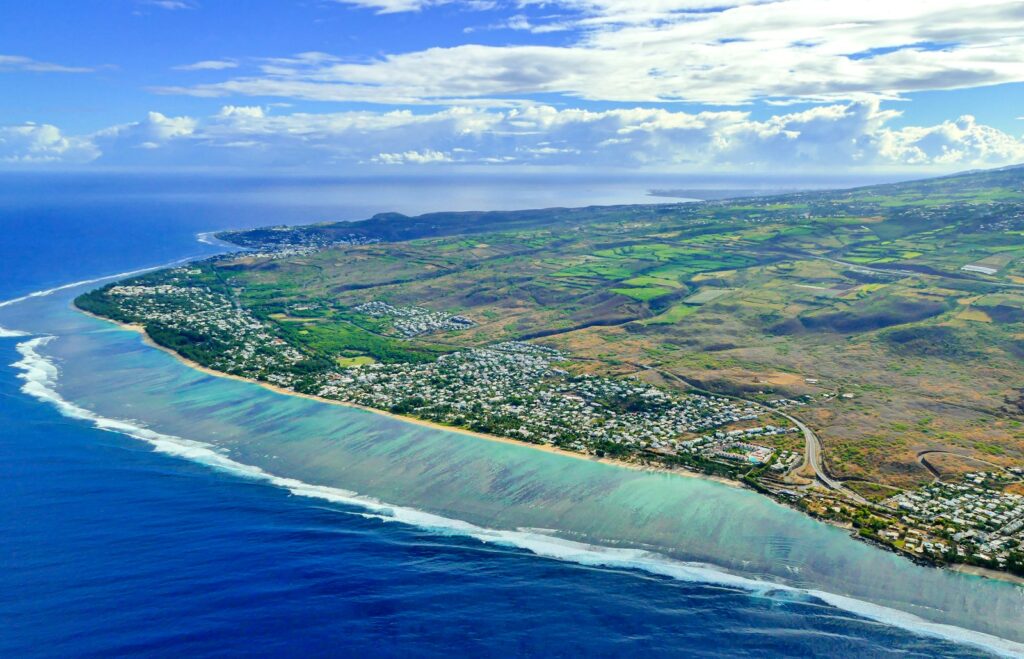
For a trip with friends, the best option is not necessarily to aim for the center of everything, but to choose an area suited to the majority of your preferences. If you like alternating between relaxing moments and outings, a base on the west coast, such as Saint-Paul, can be convenient for enjoying the coastline and then organizing day trips to other areas.
You should also take into account a reality specific to the island: the weather can vary depending on the areas and the terrain. To better anticipate how to organize your days, it is useful to read this article about microclimates on Réunion Island. This helps you plan alternatives when one part of the island is cloudier than another.
How to choose the most suitable area
- If your group prioritizes swimming and relaxation, it is better to stay close to the coastline.
- If you want to explore several different atmospheres, choose an area that is convenient for exploring the surrounding region.
- If you are mainly planning hikes, remember the fatigue associated with returning at the end of the day.
- If some people mainly want to relax, avoid a location that requires too much daily travel.
The most important thing is to avoid a choice that seems ideal “on paper” but complicates logistics once you are there.
Plan travel realistically
On an island with pronounced terrain, getting around always requires some forethought. For a trip with friends, it is better to think of travel as part of the journey, rather than as a detail to deal with afterward. Simple organization will help you avoid rushed mornings, constant changes of plans, and tensions over punctuality.
The best method is to group activities by area. Instead of crossing the island for a single visit, try to combine several nearby ideas on the same day: a viewpoint, a walk, a meal break, and possibly some time by the sea on the way back.
Good habits for getting around as a group
- Decide in advance who will handle navigation and daily organization.
- Prepare the next day’s itinerary the night before to avoid last-minute hesitation.
- Set a realistic departure time, not a theoretical one.
- Always allow extra time for breaks, photos, and unexpected events.
- Avoid cramming too many different places into a single day.
This approach is even more relevant if you are planning an outing to the volcano. The Piton de la Fournaise is one of the island’s major landscapes, in its southeastern part. Such a day deserves to be planned as a highlight in its own right, rather than added to an already busy itinerary.
When everyone knows the general plan, the atmosphere is more relaxed. The group enjoys the journey itself more, which is also part of the Réunion experience.
Create a balanced itinerary without trying to fit everything in
The most common mistake during a trip to Réunion with friends is trying to make the most of every single day. Yet the island is best discovered when you accept a certain tropical rhythm: setting off early for some outings, yes, but without turning the vacation into a constant race.
A good itinerary generally alternates between three types of days: sightseeing days, more active nature days, and days to unwind. This balance is what allows the group to remain enthusiastic until the last day.
A simple structure that works well
- 1 day focused on the coast: beach, swimming, a walk, sunset.
- 1 more active or earlier-rising day: hiking, landscapes, panoramic views.
- 1 more flexible day: market, village, leisurely meal, free time.
- 1 major highlight of the trip: volcano, cirque, scenic route, or memorable nature outing.
This alternation prevents accumulated fatigue. It also allows everyone to enjoy the trip, even if all group members do not have the same energy levels. Some can set off early while others take the morning more leisurely, then everyone meets up afterward.
For days spent by the sea, you can find ideas in this article about the most beautiful beaches on Réunion Island. And to reduce the budget or improvise a simple day, this selection of ’free activities to do on Réunion Island may also inspire the group.
Divide up the roles to avoid placing the mental load on just one person
In many groups, one person ends up managing everything: accommodation, itinerary, groceries, reservations, schedules, practical questions. As a result, they enjoy the trip less. To maintain a genuinely convivial atmosphere, it is better to share responsibilities before arrival.
This organization is not rigid at all. On the contrary, it lightens the atmosphere because everyone knows what they have to do. One person can keep track of activity ideas, another can take care of meals, and a third can centralize useful information for the next day’s departure.
Example of a simple division of responsibilities
- An accommodation coordinator: arrival, keys, practical information, coordination on site.
- A travel coordinator: routes, order of the stages, morning departures.
- A meals and groceries coordinator: breakfasts, shared dinners, division of purchases.
- An activities coordinator: suggestions, weather, alternative plans.
- A shared budget coordinator: shared fund, tracking common expenses, balance among participants.
With this method, no one carries the entire trip on their shoulders. This is particularly appreciated during a trip lasting several days, when fatigue can make small decisions feel more burdensome.
Nurturing convivial moments, not just outings
People often remember simple moments just as much as grand excursions. A successful getaway with friends isn’t just about “seeing things”; it’s also about creating an atmosphere. In Réunion, the gentle evenings, shared meals, and conversations after a busy day all contribute fully to the pleasure of the trip.
For this, there’s no need for a sophisticated schedule. Simply plan a few group moments that give the stay a rhythm without making it feel too structured.
A few easy ideas to put into practice
- Plan a quiet first dinner on the evening of arrival to start the stay without pressure.
- Organize a “back from the beach” or “back from an excursion” evening with a simple meal.
- Leave one evening completely free, with no planned activity.
- Share photos every evening or at the end of the stay to relive the highlights.
- Plan one last moment together before departure, even if it’s very simple.
These pauses prevent the trip from becoming a succession of early-morning departures. They also allow the group’s different personalities to connect more easily: the more active members have their adventures, the more contemplative ones have their quiet time, and everyone comes together in a warm atmosphere.
If you’re staying in a seaside house in Saint-Paul, such as Villa O’rizon Bleu listed by Le Jardin de Corail, this kind of rhythm naturally makes perfect sense: the day can be devoted to exploring, followed by an evening devoted simply to the pleasure of being together.
Plan B to adapt to the island
Réunion is a magnificent destination, but it requires a little flexibility. With differences in weather from one area to another, the group’s varying energy levels, and changing preferences during the trip, an overly rigid schedule can quickly become frustrating.
The ideal approach is therefore to prepare a few alternatives. If a day in nature seems less favorable, you can switch to a beach, an easier walk, a local discovery, or a more relaxing day. If the group is tired after a major outing, it is better to take it easier the next day rather than stick to an ambitious schedule “on principle”.
Mistakes to avoid
- Trying to cross the island every day.
- Planning only demanding activities.
- Overlooking differences in pace among friends.
- Putting off all decisions until the day of, without a basic plan.
- Making the success of the trip depend on a single major outing.
A flexible trip is not a poorly organized trip. On the contrary, it is often a sign of good preparation: you know what really matters, and you adapt the rest without stress.
Frequently asked questions
How to organize a trip to Réunion Island with friends without arguing?
The most important thing is to clarify expectations before departure: budget, pace, and whether you want beach time, hiking, or relaxation. Then, divide up the responsibilities so that the organization does not fall to just one person. Finally, keep the schedule flexible, with time together and more free time.
What type of accommodation should you choose for a group of friends in Réunion?
For a group, it’s better to prioritize accommodation where everyone can spend time together while still having some privacy. The number of bedrooms, guest capacity, and location matter more than an accumulation of secondary amenities. The key is to have a practical, pleasant base for meals, setting out, and returning at the end of the day.
Do all activities need to be planned in advance?
No, it’s better to prepare an outline rather than an overly tight schedule. Identify a few key days and some simple alternatives depending on the weather or the group’s fatigue. This approach lets you retain flexibility without wasting time deciding everything at the last minute.
How to get around during a trip with friends to Réunion Island?
The most effective approach is to group outings by geographic area and prepare the next day’s schedule the day before. Designating one or two people responsible for the trips helps a lot. This avoids chaotic departures, improvised changes of direction, and overly busy days.
What should you do if all your friends don’t have the same pace on site?
You don’t need to do everything together from start to finish. You can plan one key shared time during the day, then let everyone enjoy some freer time. This flexibility allows the more active and more laid-back members to have a good stay without frustration.
How many activities should you plan for a week with friends in Réunion?
Over the course of a week, it’s better to aim for a balanced pace with a few memorable days and real breaks. Alternating between the sea, sightseeing, and nature often works very well. The goal isn’t to do as much as possible, but to maintain good energy throughout the stay.
Why is Réunion well-suited for a trip with friends?
Because the island makes it easy to combine several interests: relaxation, scenery, outdoor activities, and convivial moments. Its volcanic identity, notably illustrated by Piton de la Fournaise, gives it spectacular terrain, while the coastline provides a gentler setting. This contrast keeps the trip lively, even when friends do not have exactly the same expectations.
 Français
  Español
  Deutsch
  English