
cultural diversity Réunion
A world-island born of mixing: understanding the Réunionnais spirit
cultural diversity Réunion — On Réunion Island, culture reads like a living map: it is heard in the languages that answer one another, tasted in a shared cuisine, seen in the festivals that mark the year and felt in a way of being together often described by a local keyword: vivre-ensemble. The island was not built on an indigenous population, but on successive arrivals — European, African, Malagasy, Indian, Chinese, Comorian — followed by continuous mixing. This past forged a society where affiliations are multiple, sometimes intertwined within the same family, and where identity is willingly expressed in terms of ties, practices and places, rather than fixed categories.
The result is a daily culture that is both deeply rooted and constantly in motion. One observes an attachment to traditions (music, rites, know-how, festivals) and, simultaneously, a strong capacity to integrate new influences: contemporary artistic forms of expression, culinary innovations, reinterpretations of dress codes, literary and digital creation. The island, French and European by its status, also remains resolutely Indian Ocean in its networks, exchanges and imaginaries.
Historical landmarks: migrations, labor and social recompositions
Réunion's cultural dynamics are inseparable from the history of settlement and labor. The first colonizations led to the settlement of Europeans, then to the use of slavery and, after its abolition, indentured labor (contract workers) notably from the Indian subcontinent. Added to this are commercial migrations, including those of Chinese populations, and regular regional movements across the Indian Ocean. Each wave of arrival brought languages, beliefs, tastes and forms of family organization, which combined with French legal, administrative and educational frameworks.
These encounters were not smooth: they produced power relations, hierarchies and inequalities traces of which remain. But they also generated a singular social creativity: new ways of naming the world, inhabiting territories, cooking and celebrating. For accessible contextualization of the territory's key elements, one can consult an overview and essential references about the island, useful for linking geography, history and contemporary realities.
Languages and voices: French, Creole and everyday multilingualism
French structures the school system, administration and a large part of the media, but Réunion Creole is omnipresent in social life. It is used to tell stories, joke, transmit, console, and to express affective nuances that are not always easily translated. Alternation between French and Creole is frequent: one switches from one to the other depending on context, interlocutors and the emotion of the moment. This linguistic flexibility is not a mere mixture: it reveals a social skill, an ability to adjust one’s register to create closeness or, conversely, distance.
Alongside this major duo, the memory of origin languages appears through words, turns of phrase, songs, prayers and ritualized expressions: Tamil in certain religious contexts, traces of Gujarati or Hindi in the vocabulary, elements from Malagasy or African languages in everyday terms, not to mention Chinese influences in names, surnames, commercial and culinary practices. Réunion’s multilingualism is therefore not reduced to a list of languages: it is a way of circulating inheritances, sometimes discreetly, sometimes assertively.
Our Vacation Rentals in Réunion
Beliefs and spiritualities: visible and lived coexistence
One of the island’s most striking features is the proximity of places of worship and the diversity of religious practices. Catholicism, Hinduisms, Islam, Buddhisms and various forms of Christianity coexist, with a familiarity visible in the landscape: chapels, churches, mosques, temples, pagodas. This presence does not mean uniformity, but it recalls the place of the religious in structuring communities, calendars and solidarities.
In many families, affiliations can overlap: one respects Catholic rites while taking part in certain Hindu festivals, one visits a temple on occasion, one retains gestures inherited from older symbolic systems. Beyond confessional identities, there are practices of protection, blessing and care (prayers, offerings, purification gestures) that circulate between groups and adapt to life situations. This interweaving does not erase differences; it brings them close, and sometimes complementary, in a logic of pragmatic respect.
For a general-audience overview of cultural expressions and their contexts, this guide dedicated to the island’s culture offers a concise reading that helps to situate festivals, traditions and influences.
Festivals and calendars: when the year is told through celebrations
Réunion is lived to the rhythm of a plural calendar. Religious festivals structure many highlights: Catholic celebrations, Hindu festivals, moments linked to Islam, commemorations and cultural events. These dates are opportunities to transmit family narratives, to cook together, to visit, to dress differently and to remember. They also strengthen neighborhood ties: people invite, share, and sometimes attend each other’s celebrations out of friendship, curiosity or local tradition.
Added to these events are artistic and heritage manifestations: festivals, markets, events around maloya and séga, communal celebrations, lychee and sugarcane festivals, or events linked to the sea and the mountains. Cultural diversity is then perceived as a collective energy: the island becomes a stage where inheritances converse with today’s creations.
Music and dance: maloya, séga and contemporary creations
Réunionnais music tells the island’s story as much as it transforms it. Maloya, associated with memories of resistance and popular traditions, retains a singular expressive power: it carries the voice, the rhythm, sometimes trance, and a way of expressing sorrows as well as joys. Séga, in its variants, evokes more celebration, movement, and sociability. These worlds are not fixed: they cross-pollinate in turn, become electrified, hybridize with reggae, rock, hip-hop, and electronic music, giving rise to inventive local scenes.
Dance accompanies these transformations. Between traditional gestures and contemporary choreographies, bodies become a shared language. Workshops, associations, municipal stages and independent initiatives help keep this heritage alive, not as a museum piece but as a material for creation.
Cuisine: a living heritage shared at the table
In Réunion, the table is a meeting place between continents. Family cooking often revolves around rice, pulses (lentils, peas, beans), cari, rougails and multiple side dishes. The spices, stewing techniques, use of herbs and chiles reflect Indian, African, Malagasy and European influences, to which Chinese contributions are added in some preparations, in the place of noodles or in ways of stir-frying and seasoning.
This gastronomy is also a culture of gesture: pounding, roasting, judging by eye, passing on a recipe without writing it down. It tells of gardens, seasons, market produce, fishing traditions and the know-how of both the highlands and the coast. Eating Réunionnais food often means eating together: conviviality is part of the dish, as much as the ingredients.
Arts, crafts and visual expressions: between heritage and innovation
Cultural diversity is reflected in crafts (basketry, wooden objects, textiles, jewelry), in the visual arts and in the way symbols are valorized. Influences meet in patterns, colors, materials and uses: an aesthetic can borrow forms from India, visual rhythms from Africa, certain techniques from Europe, and a particular sensitivity to landscape from the Indian Ocean.
Contemporary creation, carried by artists and collectives, also explores questions of identity, memory and territory: the history of settlement, slavery, migrations, the Creole language, the relationship to France and to the world. The arts thus become spaces for debate, emotion and transmission, where one questions what it means to be Réunionnais in the plural.
Our Vacation Rentals in Réunion
Territories and ways of life: coast, highlands and local micro-cultures
If the island is small on a continental scale, its contrasts are spectacular: microclimates, reliefs, rapid changes in landscapes. These contrasts shape different ways of life between the coast, agricultural plains, cirques and highlands. Ways of living, farming, cooking and even speaking can vary from one municipality to another. Local identities attach to neighborhoods, ravines, villages, sports or agricultural practices, and to very specific family histories.
To approach this richness from the perspective of residents, a selection of character villages helps connect landscapes, architecture, markets and local traditions, moving beyond the postcard-only routes. .
Nature and culture: an intimate relationship with landscapes
On Réunion, nature is not mere scenery: it influences imagination, narratives, practices and social rhythms. Hiking, picnicking, family outings, fishing, bird or cetacean watching structure leisure habits. But nature is also tied to knowledge: recognizing a plant, knowing when the rain will come, understanding the sea, respecting the mountain. This situated knowledge is passed on through experience, oral tradition and the guidance of elders.
Exploring the large protected areas helps understand how the island articulates protection, uses and sensitivities: an overview of parks and reserves offers concrete ways to connect biodiversity and cultural experiences (trails, viewpoints, emblematic sites).
Gardens, plants and botanical legacies
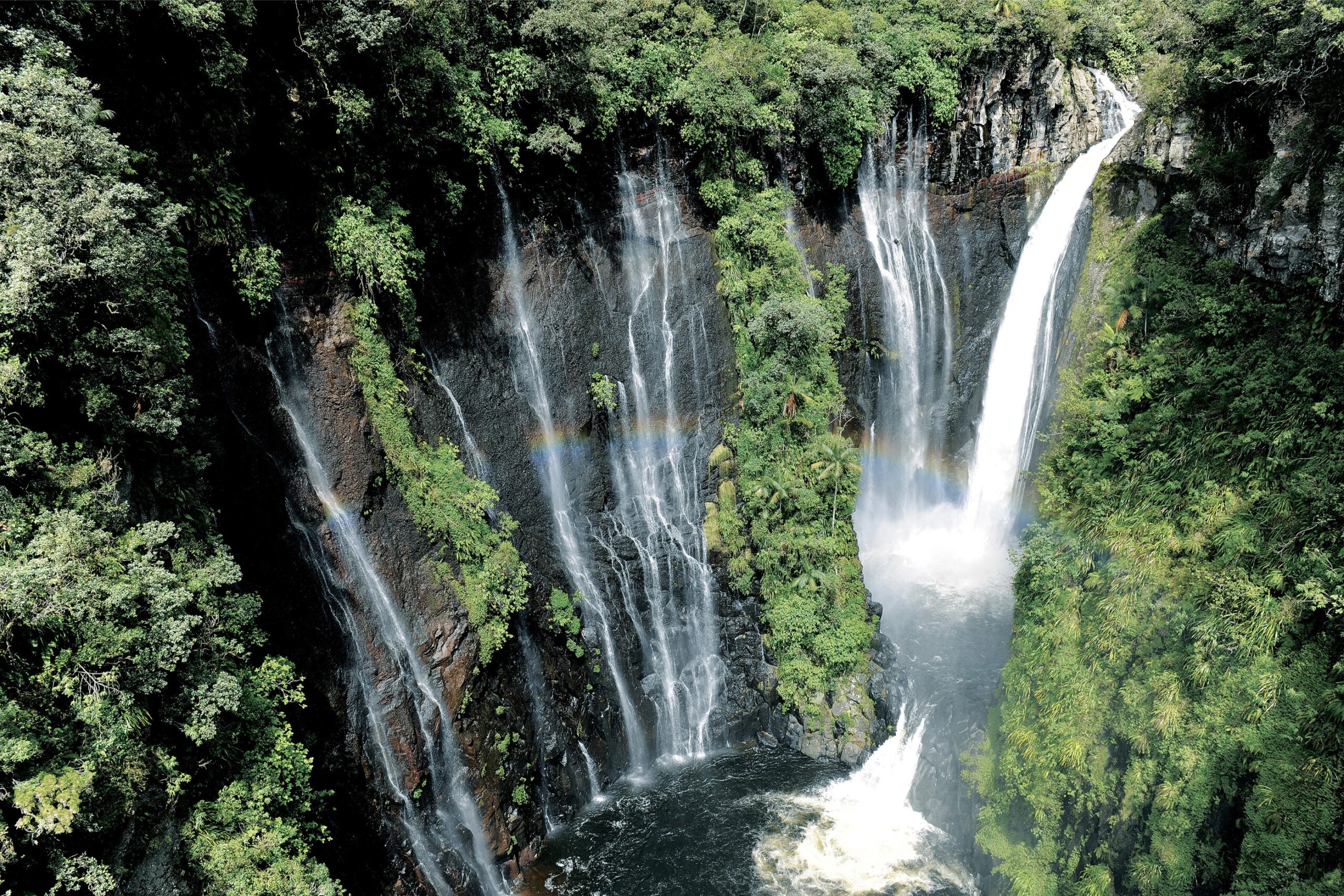
Creole gardens, family vegetable plots and botanical spaces reflect a history of movements: food, medicinal and ornamental plants from Asia, Africa, Europe or the Americas coexist there. This plant diversity is another way to read métissage: through uses (infusions, poultices, cuisines), through vernacular names, through the transmission of care and cultivation practices.
To extend this approach, a route around gardens and botanical spaces allows discovery of how plants fully contribute to local identities.
An island open to the Indian Ocean: circulations, neighborhoods, influences
Réunion cannot be understood only by its internal history: it sits at the crossroads of maritime routes and regional neighbors. Exchanges with Madagascar, Mauritius, the Comoros, India or East Africa have left traces in cuisines, music, certain forms of commerce and family ties. Contemporary mobilities — studies, work, tourism, diasporas — reactivate these connections and further broaden the field of influences.
In this context, the island develops an identity at several scales: local (neighborhood, municipality), insular (belonging to Réunion), national (being part of the French Republic) and regional (being in the Indian Ocean). This layering, sometimes a source of debate, is also a driver of cultural creativity.
Current perspectives: transmission, youth and the challenges of living together
Réunion's cultural diversity is passed on, but it is also debated. Younger generations inherit family practices while inventing their own codes: new musical styles, ways of writing Creole, digital usages, global influences. Questions of memory (slavery, indentured labor, migrations), social equality, cultural recognition and language valorization are present in the public sphere, in schools, in associations and in creative work.
This ongoing dialogue is one of the signs of the island’s vitality: culture there is not only preservation, it is negotiation and reinvention. For an institutional perspective highlighting the island’s identity and experience, a page dedicated to the intensely authentic soul of the territory clearly illustrates this desire to tell Réunion through its particularities.
Advice for discovering this plurality without reducing it to folklore
Discovering Réunion culturally means accepting to slow down and observe. Favor markets and small eateries, talk with locals, attend a communal festival, visit a museum or memorial site, listen to a local concert: these are all opportunities to perceive nuances. It is also useful to respect codes: ask before photographing ceremonies, learn about the meaning of rites, avoid quick judgments about what may seem contradictory from the outside.
Our Vacation Rentals in Réunion
To prepare a stay taking into account the climate and the periods most favorable for cultural and natural activities, a guide to the ideal times to travel helps align desires, weather and possible events.
The sea as a cultural stage: between fishing, leisure and animal migrations
The coastline is a space where sports, traditions and contemplation intersect. The relationship to the sea is expressed in daily practices (fishing, swimming, boat outings), in family stories and in shared moments of wonder. Certain times of year make this relationship particularly tangible, notably when cetaceans can be observed offshore.
To place these observations on the right timeline, markers according to the period allow organizing a respectful and realistic experience.
Synthetic overview: a land of encounters and contrasts
What strikes, in the end, is the way the island makes multiple heritages coexist without dissolving them: they remain identifiable, but transform when they come into contact with one another. Languages respond to each other, cuisines influence one another, musics blend, festivals overlap, and territories produce micro-identities. Cultural diversity is not only a fact of the past: it is a daily practice, made of choices, respect, inventions and sometimes tensions.
For further reading that highlights this plurality as a central characteristic of the territory, an overview of Réunion as a land of diversity offers an interesting angle for linking culture, society and travel experience.
Conclusion: a relational culture, to be lived more than summarized
Réunion cannot be boxed into a single cultural label: it is understood through relationships, circulation and contexts. Its identity is expressed in simple gestures — speaking, cooking, inviting, celebrating — as much as in artworks, rites and landscapes. Approaching this island is accepting that multiple histories can be true at the same time, and that métissage is not a slogan but a lived experience.
To extend this on-site discovery and easily move between the coast, highlands and living areas, see available accommodations allows you to organize a stay close to the local atmospheres without losing sight of what makes Réunion unique.
Finally, if you would like additional practical information (customs, field advice, useful reference points), a guide to know everything serves as a complementary resource to prepare a thoughtful and respectful exploration.
 Français
 Español
 Deutsch
 English